Bedrock Quartz has been making Utah homeowners happy for years with natural stone countertops. For as long as we have been in business, we have seen trends come and go. And right now, one of the hottest trends is dramatic, high-movement veining.
Veining has the potential to push an undecided homeowner over the edge. Perhaps a couple sees a veining pattern in a marble countertop that blows them away. They are in such awe of the beauty that they are ready to purchase and install right then and there.
Dramatic high-movement veining is veining on steroids, if you will. People seem to love it. Here in Utah, homeowners find it particularly attractive because it lends itself so well to our rugged, mountain environment.
What It Looks Like
High-movement veining is typically found in quartzite and marble. It is not so much a factor in granite. As for quartz, the fact that it is a manufactured product means it can be made to look like almost anything. At any rate, what does high-movement veining actually look like?
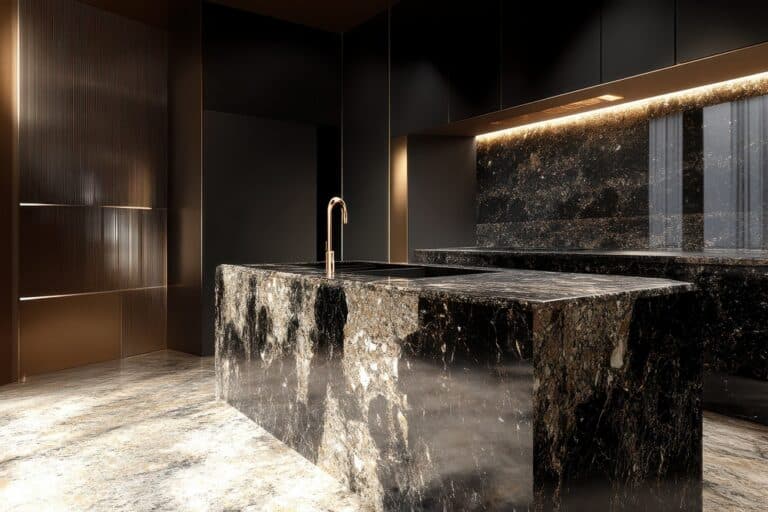
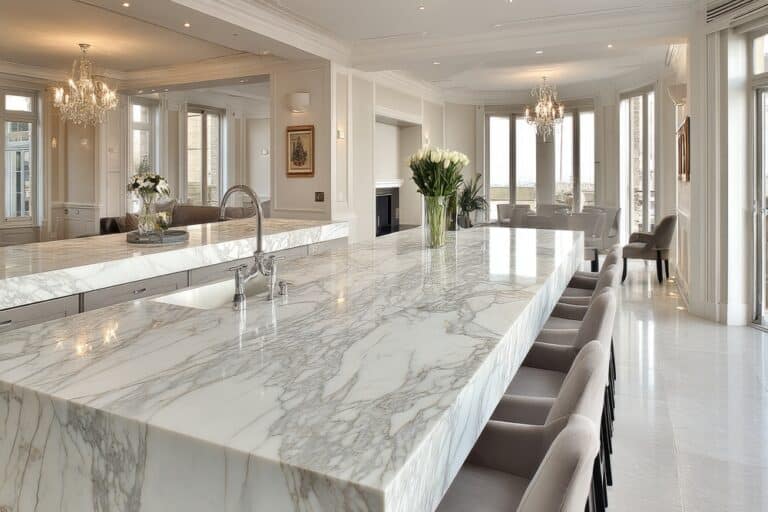
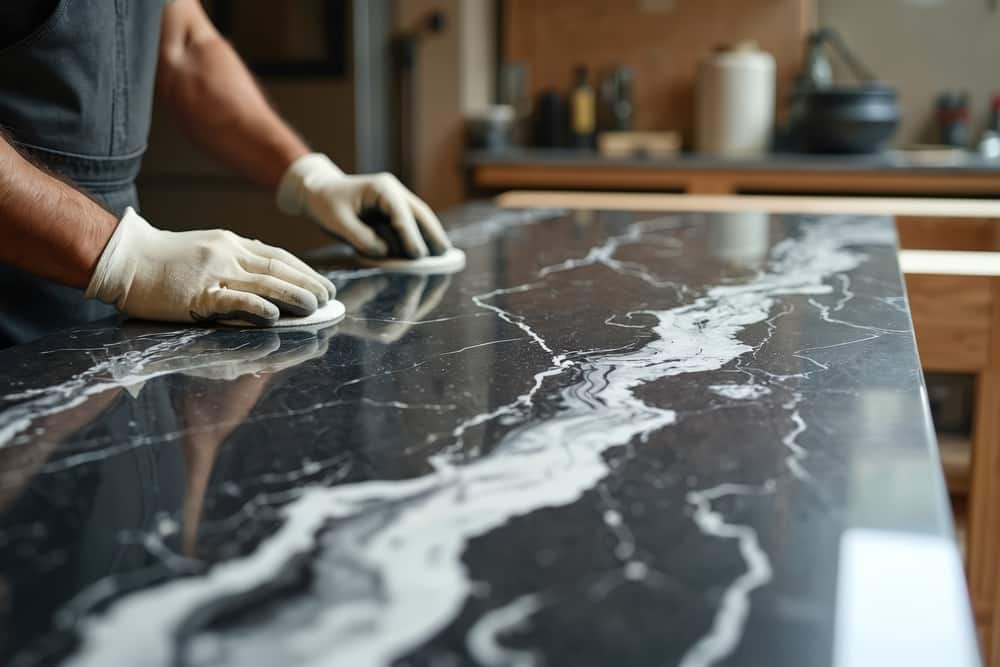
When designers talk about high-movement veining, they are referring to bold, dramatic, flowing patterns typified by thick and sweeping veins. The combination of thickness and length creates a sense of dynamic motion across the entire slab. It’s almost as if you’re seeing the slab move even though it’s really stationary.
How It Occurs in Quartzite
All the veining in natural stone is the result of mineral impurities and their responses to heat and pressure during the geological cycle. In terms of high-movement veining, it differs slightly between quartzite and marble.
In quartzite, high movement veining is the result of sandstone metamorphism. As time, heat, and pressure do what they naturally do, elongated veins appear. They tend to be more uniform compared to marble. Patagonia and Taj Mahal quartzite typically boast high-movement veining.
How It Occurs in Marble
Marble develops high-movement veining when recrystallized limestone is infiltrated by other minerals. This infiltration produces organic swirls or bold streaks in many varieties. You wind up with prominent, high-contrast lines that don’t necessarily obey the rules of uniformity.
Going with a high-movement veining pattern in marble requires being a lot more selective with your slab. Otherwise, you run the risk of a lack of pattern continuity significant enough to stand out like a sore thumb.
Why High-Movement Veining Is Popular
Consumers have their own preferences when it comes to choosing attractive countertops. So really, popularity boils down to what consumers want at any given time. But why do so many suddenly want dramatic, high-movement veining?
It is a trend among designers who prefer to create striking visuals in minimalist spaces. And right now, minimalism is in. It seems normal that homeowners with the same minimalist vision would agree with what their designers say about high-movement veining.
Another thing to note is that marble and quartzite are both considered luxury finishes. For marketing purposes, high movement shows up better in photographs. Combine the two, and you have luxury-focused marketing presenting consumers with images of high-quality quartzite and marble slabs featuring high-movement veining. It’s what everybody sees. So it’s also what everybody wants.
Bedrock Quartz Can Make It Happen
Perhaps you’ve caught the high-movement veining bug. You’re ready to install a new quartzite or marble countertop. Well, you’re in luck. Bedrock Quartz can make it happen.
Stop by any of our Utah showrooms and take a look at our slabs. Also bring all your questions. By the time you leave, we can have you hooked up with new countertops perfectly aligned with your vision.