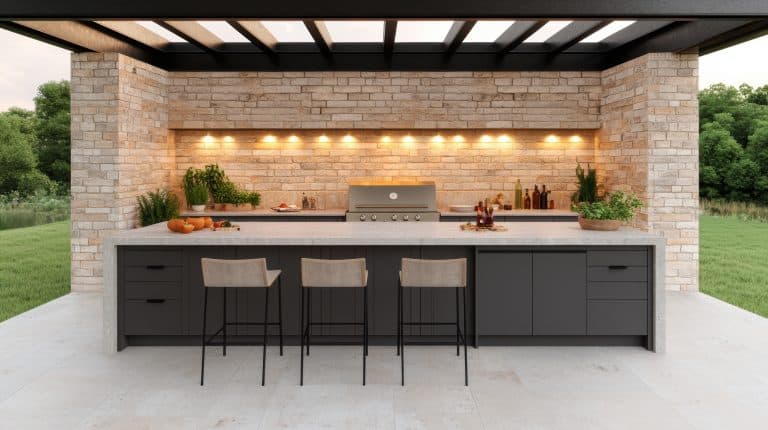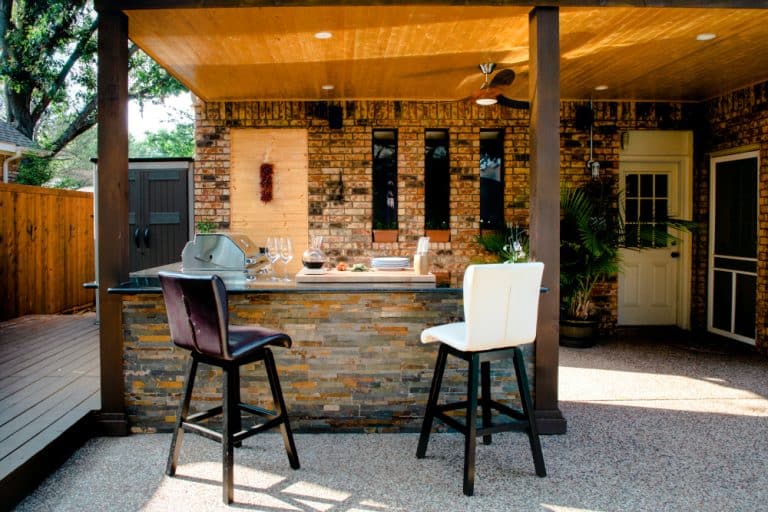
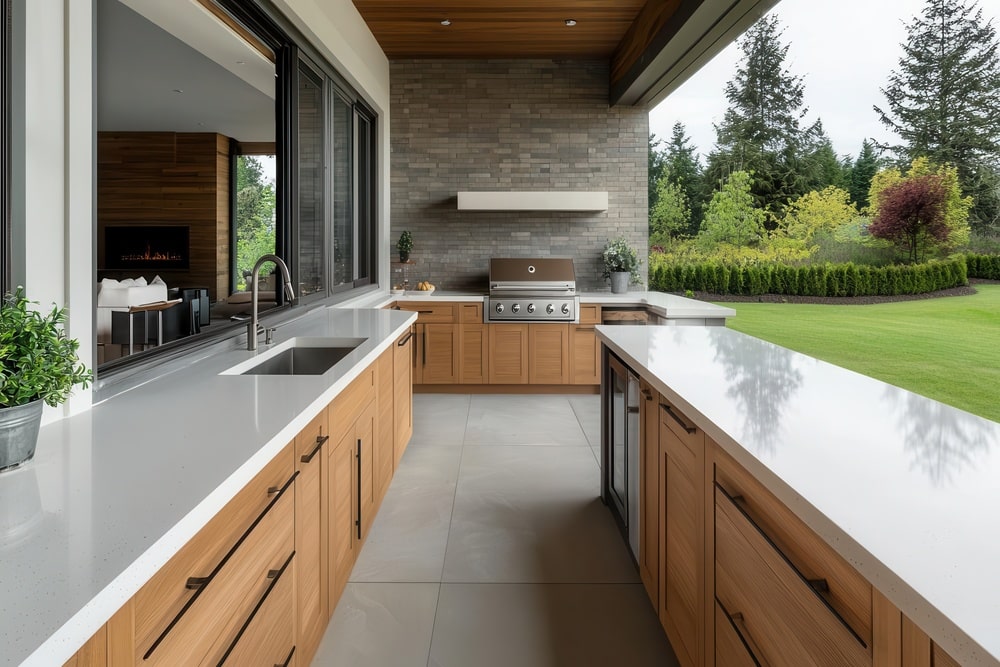
Summary: An outdoor kitchen is a wonderful amenity to have. But outdoor kitchens are subject to the natural environment. In Utah’s high-desert climate, that means being careful about material selection. Two stone materials in particular stand out.
There is nothing quite like an outdoor kitchen when entertaining guests, especially here in Utah. Our stunning natural environment provides the perfect backdrop for dinner parties, birthday celebrations, or just hanging out with friends on the weekend. But installing an outdoor kitchen in Utah has its challenges. Most of them are related to our high-desert climate.
Our focus here at Bedrock Quartz is the stone countertop. We offer four material choices normally found inside the house: granite, marble, quartzite, and quartz. In an outdoor kitchen scenario, sealed granite and quartzite are the two best choices. Marble and quartz could be made to work, but we generally don’t recommend them for outdoor environments.
Specific Concerns for Utah Outdoor Kitchens
Everything outdoors is subject to climate and environmental conditions. Here in Utah, our high-desert climate presents some unique challenges for outdoor kitchen design. The three biggest concerns here are:
- Temperature Fluctuations – We have hot summers and cold winters here in the Beehive State. Not only that, but we can also experience significant temperature swings in a single 24-hour period. It can go from uncomfortably warm to freezing cold overnight.
- Sun Exposure – Sun exposure is not necessarily bad when you are outside on a chilly day and looking to warm up. But constant exposure to the sun equals UV damage for patio furniture, awnings, and even outdoor kitchen countertops.
- Wind Exposure – High-desert environments tend to experience strong winds. Wind can be damaging by itself. But any such damage can be made worse by airborne debris. In an outdoor kitchen, wind can make otherwise effortless cooking more challenging.
Overall, focusing on weather-resistant materials is a good idea when designing an outdoor kitchen. Materials that resist moisture and UV rays are at the top of the list. In terms of countertops, many types of natural stone handle temperature fluctuations just fine.
Quartzite for Outdoor Kitchens
The best natural stone for outdoor kitchen countertops is arguably quartzite. It is the most expensive option, but it is worth the investment if you can afford it. Quartzite offers exceptionally good temperature fluctuation resistance and is highly resistant to UV rays. It’s a high-end material and one that is perfectly suited to durable setups.
In terms of maintenance, occasional sealing is necessary to maintain performance. Expect to seal more frequently than you would indoors. How frequently depends on the quality of your sealant, how often you use your outdoor kitchen, and how much climate exposure it is subject to.
Granite for Outdoor Kitchens
Granite is another excellent choice, provided it is properly sealed. Sealed granite handles temperature fluctuations quite well and offers good UV resistance. Its natural look blends perfectly with Utah’s stunning landscapes. It fits right in whether you live in the city or at the very end of the Wasatch Mountains.
Heat-heavy environments are ideal for sealed granite. But as always, periodic sealing is the key to keeping an outdoor granite countertop in good condition. It is best to use a sealant specifically made for granite. Seal as often as necessary to properly protect the material.
Why Marble and Quartz Aren’t Recommended
Marble is a beautiful material, ideal for kitchen and bathroom countertops. But it is also one of the more fussy natural stones. It etches easily and it is highly porous. In an outdoor kitchen, both properties are bad news.
Easy etching puts a marble countertop at risk of damage from acidic spills, barbecue residue, and even rain. As for high porosity, it is an open invitation to water stains left behind by rain. In a cold Utah winter, any rain trapped in the countertop’s pores will expand with freezing temperatures. Repeated freeze-thaw cycles could end up cracking the material.
As for quartz, it is an engineered material that works exceptionally well indoors. Quartz is also stain-resistant and doesn’t scratch easily. The big downside is that it is subject to fading and warping outdoors, especially if exposed to direct sunlight. Direct sunlight and UV rays both break down the resins that bind quartz together.
Many manufacturers will not offer warranties on quartz for outdoor use. If a homeowner insists on quartz, the fabricator will usually recommend some sort of covering for shade. They also tend to recommend not installing the countertop anywhere near gas or charcoal grills.
A Quick Word About Porcelain
Although Bedrock Quartz does not sell and install porcelain slabs, integrity dictates we mention them for outdoor kitchens. Porcelain is an engineered material that can be made into slabs as easily as tiles. It is a good material for outdoor environments.
Porcelain offers excellent resistance to temperature swings and UV exposure. It is a nonporous material requiring minimal maintenance. And for an outdoor kitchen that is going to be left under direct sunlight, porcelain is a good choice. The sun doesn’t bother it.
Porcelain is not stone, though it can be made to look like it. So here is our recommendation: if you have your heart set on natural stone, choose sealed granite or quartzite. They are the two best stone materials for outdoor kitchens in high-desert climates.
Visit a Bedrock Quartz Showroom
Are you planning to build an outdoor kitchen for your Utah home? If so, we strongly encourage you to visit a Bedrock Quartz showroom. We have a nice selection of granite and quartzite slabs you can see and touch in person. We also staff our showrooms with experienced and knowledgeable representatives more than capable of answering your questions.
Ultimately, you can make your outdoor kitchen whatever you want it to be. From custom cabinetry to the finest stone materials, you are only limited by your budget and potential space constraints. So why not take a good look at natural stone?
Both granite and quartzite are excellent materials more than capable of standing up to the high-desert climate. Both materials look stunning. They are the veritable crown on a custom designed outdoor kitchen that should provide years of enjoyment as you look to entertain in one of the best natural environments in America.
FAQs
Is stone a better choice than concrete, wood, etc.?
Natural stone certainly has its advantages for outdoor kitchens. Whether it is a better choice than other materials depends a lot on preference.
Why do UV rays damage quartz but not the other stone materials you sell?
Quartz is an engineered material manufactured by combining quartz minerals with resins. Unfortunately, the resins break down under UV light. Natural stone does not.
How do I protect stone countertops against freeze-thaw cycles?
A good sealant designed for outdoor use is the ticket to prevent freeze-thaw damage. The sealant prevents water from being trapped in the stone.
How long does an outdoor countertop project take?
As with indoor projects, plan for 2-6 weeks from start to finish. The actual installation probably won’t take more than a day.
Do slabs for outdoor use come with warranties?
We can discuss warranty information with you when you visit one of our showrooms. The details may differ depending on your material selection.