Installing a quartz countertop is a job best left to professionals. Fortunately, we install everything we sell here at Bedrock Quartz. But our customers still have questions about installation. A lot of the questions we hear are related to backsplashes.
A backsplash is handy to have. It protects the wall above the counter space from incidental splashes and other things that could otherwise leave stains behind. If you already have a backsplash or want to add one, there are some things to think about in relation to new countertop installation.
Dealing With an Existing Backsplash
You might assume that an existing backsplash needs to be removed in order to install a new quartz countertop. That may or may not be the case. A lot depends on the size and position of the current backsplash as well as the materials from which it is made. Let us look at a couple of different scenarios.
Scenario #1: Integrated Backsplashes
Older stone or quartz lip-style backsplashes can prove problematic. They are easily identified by their telltale overhangs. A lipped backsplash is more or less an integrated backsplash that looks like it is part of the countertop. It would look odd if left in place.
The problem with integrated backsplashes is the overhang they create. That overhang might interfere with the new quartz slab. You could wind up with an uneven transition or a gap that needs to be filled later on. You are better off just removing the backsplash entirely. A new one can always be installed later.
Scenario #2: Full-Height Backsplashes
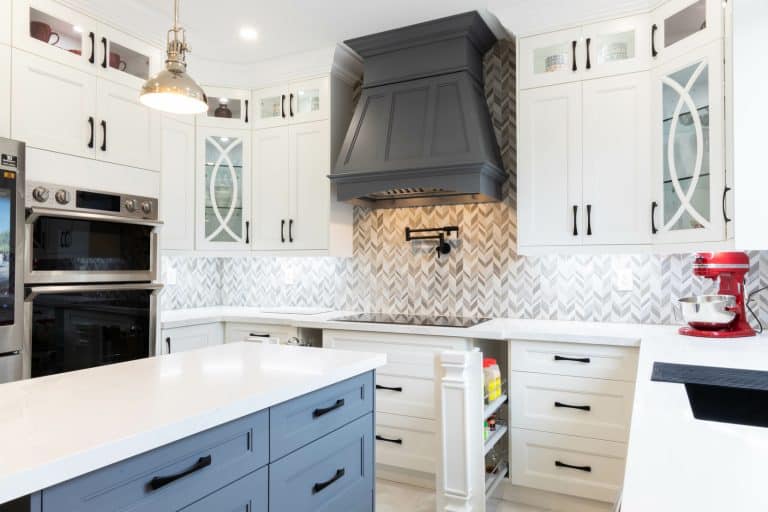
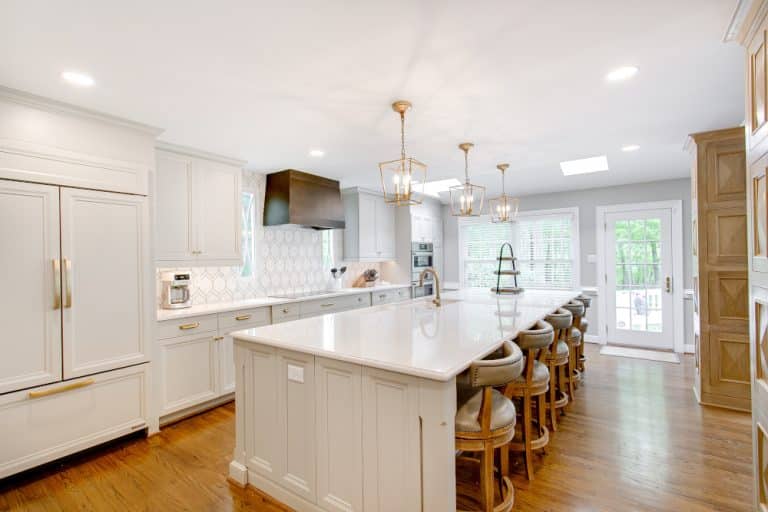
The second scenario involves a full-height backsplash made of tile. They are expensive backsplashes that are normally installed by professionals. As such, homeowners typically want to preserve them.
It is possible, at least in most cases, for skilled tradesmen to install a new quartz countertop without removing a full-height backsplash. But they need to be incredibly careful not to break the bottom row of tiles. Shims and caulk may still be necessary to complete the transition.
Installation With No Existing Backsplash
The best possible scenario for installers is the no-backsplash installation. Whether or not a backsplash will be added later, installation of the quartz countertop can go off without a hitch. Incidentally, any plans to add a backsplash should be delayed until the countertop is installed. Installing the backsplash second ensures a tight fit and a seamless transition.
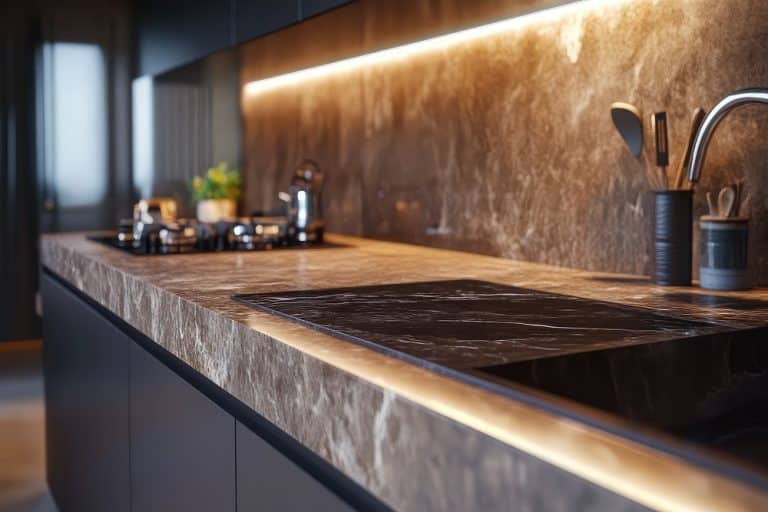
One option for adding a backsplash is simply extending the same quartz slab. You end up with a seamless transition and a fantastic look that is durable and low maintenance. Best of all, there is no grout involved.
Consumers who would rather have tile backsplashes are looking at a little more work, but it is not too bad. Any tiles that will go over the top of the quartz easily adhere to the surface with silicone caulk.
Let a Professional Do Both
Whether you purchase your new quartz countertop from Bedrock Quartz or another supplier, we recommend that you leave installation of both a countertop and backsplash to professionals. Quartz countertops are difficult to handle. Installation also requires a level of precision most homeowners do not possess. As long as you’re having the countertop professionally installed, you might as well do the same with the backsplash.
Of course, backsplashes are not mandatory. That’s the last thing to know before you select your quartz countertop. If you would rather not have a backsplash at all, no worries. We can still install a high-quality quartz countertop that will completely change the look and feel of your kitchen. Are you ready?