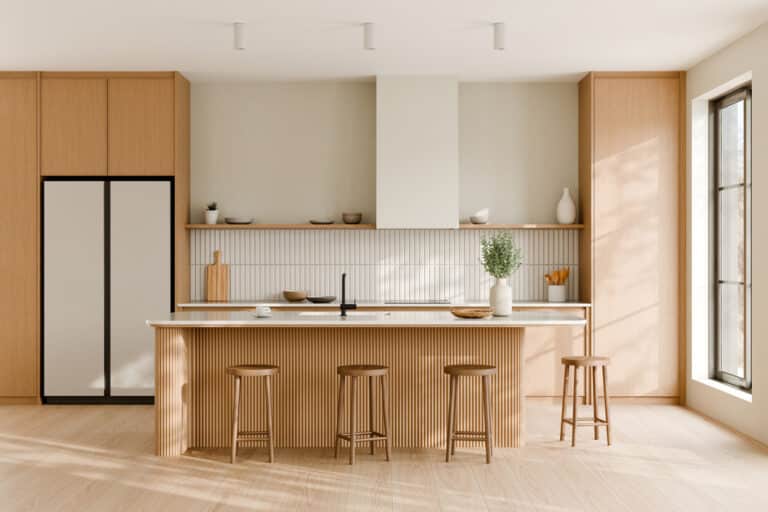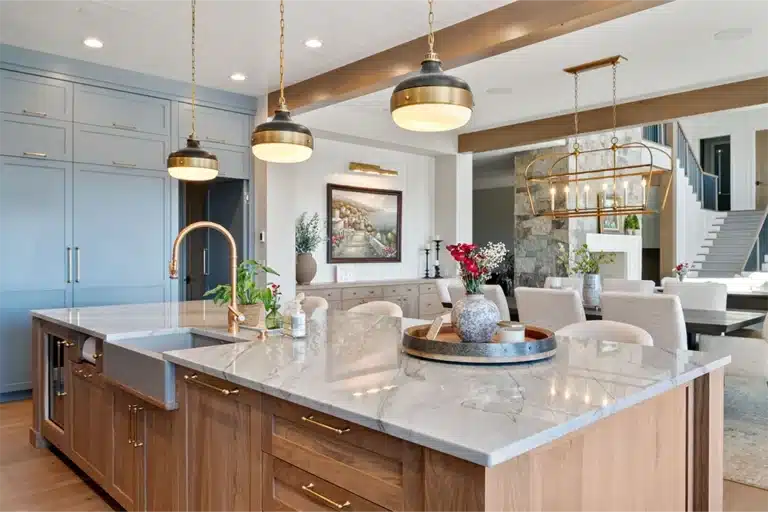
Summary: Carrara Pisa quartz offers a soft white surface with delicate gray movement and the practical benefits of engineered quartz. Learn how it looks, what it pairs with, how much it may cost, and whether it is the right choice for your Utah home.
Carrara marble has influenced kitchen and bathroom design for generations. Its white surface and soft gray movement can brighten a room, but natural marble also brings maintenance requirements that do not suit every household.
Carrara Pisa quartz offers a practical alternative. Made by Daltile as part of its ONE Quartz Surfaces collection, it combines a soft white background with delicate gray details. For Utah homeowners who want Carrara-inspired character with the everyday benefits of engineered quartz, it is worth a closer look.
Carrara Pisa Quartz at a Glance
Carrara Pisa may also be listed as Daltile Carrara Pisa, Carrara Pisa Daltile, ONE Quartz Carrara Pisa, or product code OQ96. These names refer to the same surface.
| Product Detail | Carrara Pisa |
| Manufacturer | Daltile |
| Product Line | ONE Quartz Surfaces |
| Product Code | OQ96 |
| Material | Engineered quartz |
| Primary Color | Soft white |
| Pattern | Delicate gray movement |
| Finish | Polished |
| Available Thicknesses | 2 cm and 3 cm |
| Nominal Slab Size | 136 × 79 inches |
| Common Applications | Interior countertops, islands, vanities, backsplashes, and wall applications |
| Exterior Use | Not recommended |
| Local Availability | Confirm with Bedrock Quartz before visiting |
Daltile produces it in polished, nominal 136-by-79-inch slabs in 2-centimeter and 3-centimeter thicknesses. Availability for a specific Utah project depends on current local inventory.
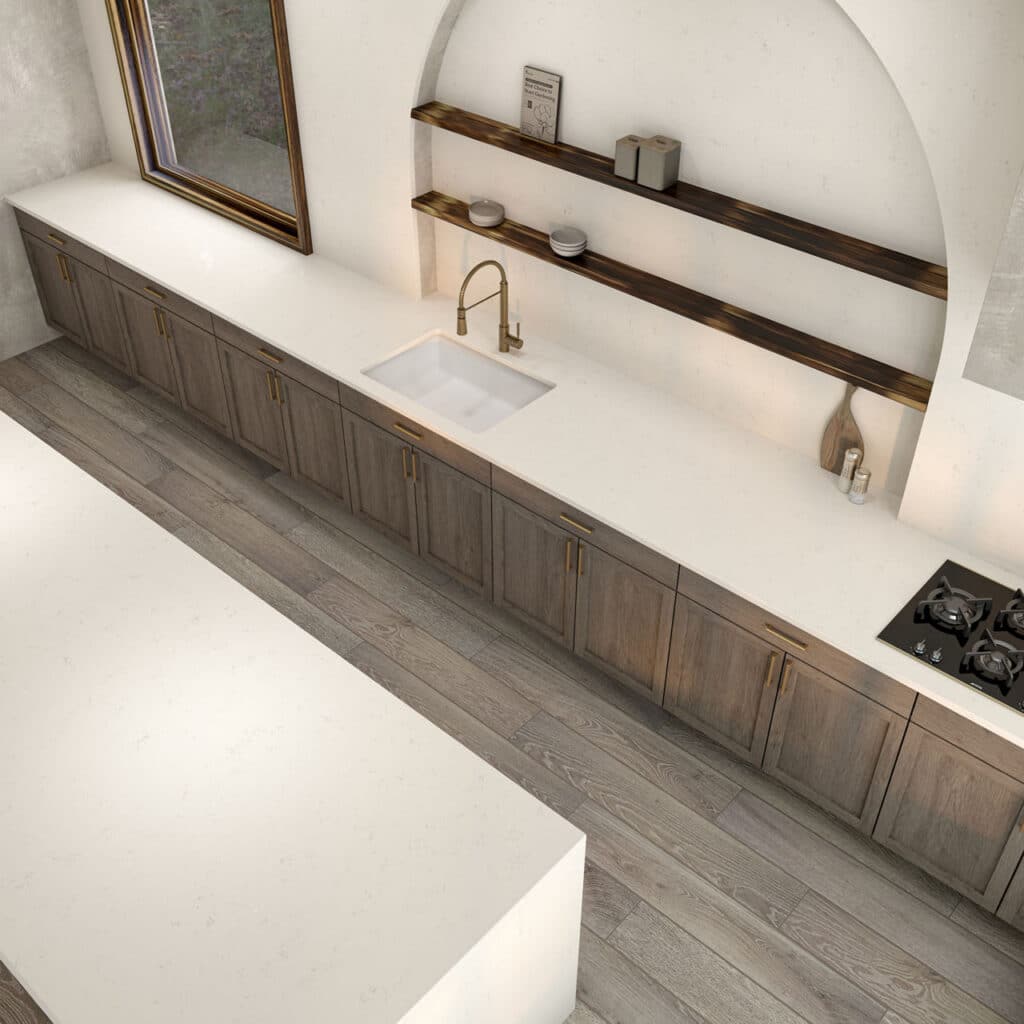
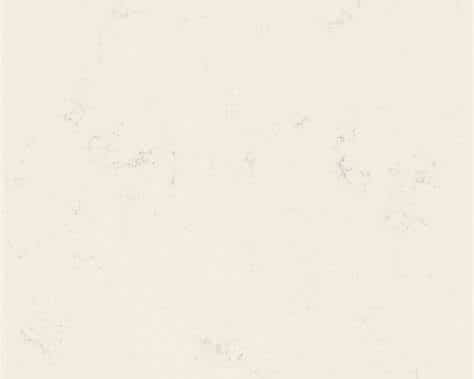
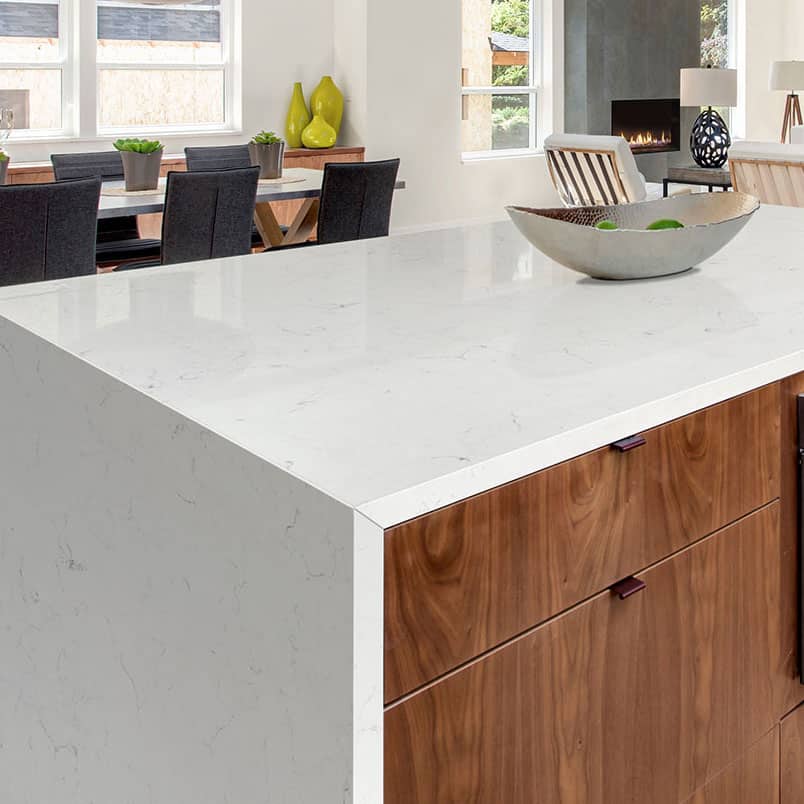
What Does Carrara Pisa Quartz Look Like?
Carrara Pisa has a soft white background with fine, scattered gray movement. Its pattern is more restrained than the broad, dramatic veins associated with many Calacatta quartz designs. From a distance, a Carrara Pisa quartz countertop may appear mostly white; closer inspection reveals the subtle gray detail that keeps it from looking solid or overly uniform.
Is Carrara Pisa Warm or Cool?
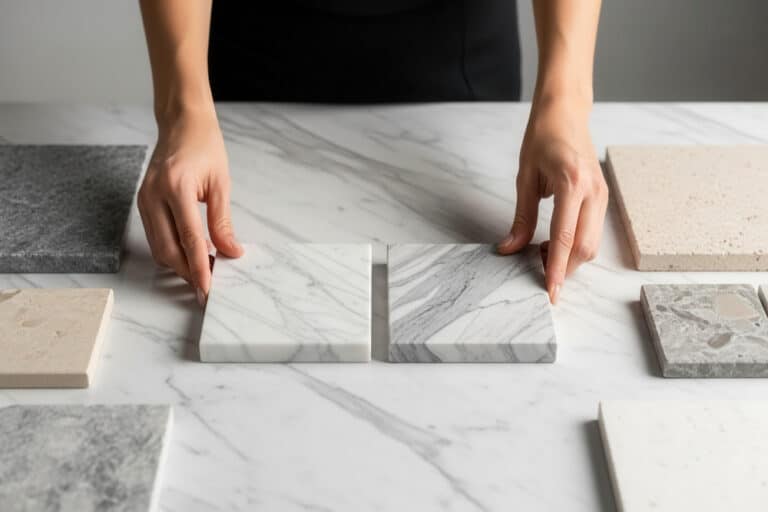
Carrara Pisa generally reads as neutral to slightly cool, but nearby finishes can shift its appearance. Cool lighting may emphasize the gray details, while natural wood, warm lighting, or brass fixtures can soften them. View a large sample beside your other materials because a screen cannot show the pattern across an entire island or kitchen.
What Cabinets Go With Carrara Pisa Quartz?
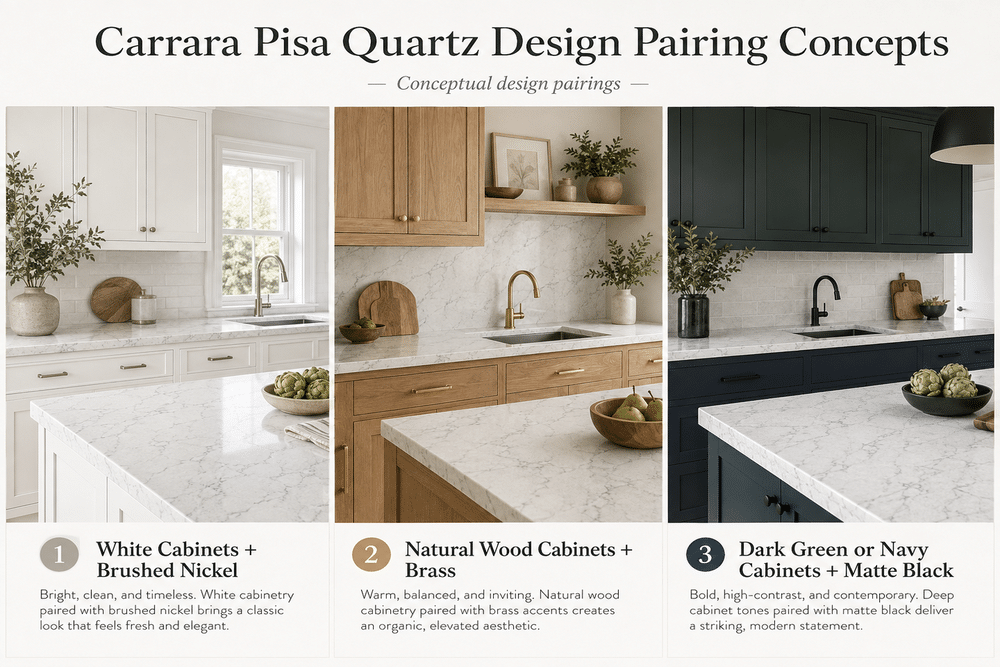
Carrara Pisa works with many popular cabinet finishes. The best pairing depends on whether you want the countertop to blend into the design, introduce contrast, or connect several colors in the room.
White Cabinets
White cabinets and Carrara Pisa create a bright, continuous look that can help a kitchen feel more open. The two whites do not need to match exactly, but their undertones should be compatible so one does not appear noticeably yellow, blue, or gray beside the other.
Natural Wood or Gray Cabinets
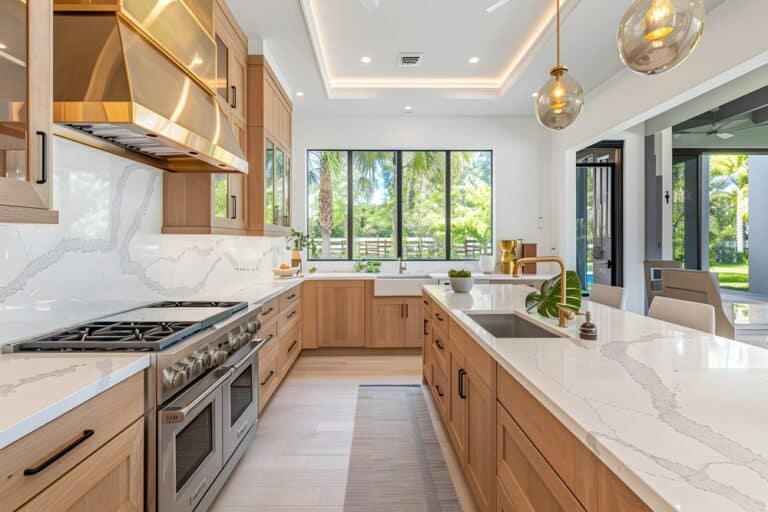
Oak, walnut, and other natural wood tones add warmth and make Carrara Pisa’s gray movement easier to see. Light oak creates a relaxed, contemporary feel, while medium or dark woods provide stronger contrast. Gray cabinets can echo the countertop detail, but compare samples carefully because conflicting gray undertones may become more obvious after installation.
Navy, Green, or Charcoal Cabinets
Darker painted cabinets allow Carrara Pisa to stand out without requiring a boldly veined countertop. Navy, muted green, and charcoal can work especially well on an island or lower cabinets when the design needs more depth and contrast.
Choosing a Backsplash for Carrara Pisa
A backsplash should support the countertop rather than fight for attention.
A backsplash should support the countertop rather than compete with it. Carrara Pisa’s quiet pattern works with subway tile, lightly textured ceramic tile, and restrained mosaics. Be cautious about placing it beside another surface with strong, unrelated veining, which can make the room feel busy.
You can also continue Carrara Pisa up the wall as a short or full-height slab backsplash. This produces a cleaner transition and eliminates the need to coordinate a second pattern, but it increases material needs and should be included early in planning and estimating.
Hardware, Flooring, and Edge Profiles
Chrome, brushed nickel, and stainless steel reinforce Carrara Pisa’s clean appearance. Brass adds warmth, while matte black creates sharper contrast. Natural wood and wood-look flooring balance the surface; simple gray, beige, or cream tile can also work.
A flat or eased edge feels simple and modern, a demi-bullnose softens the profile, and an ogee edge can complement a traditional kitchen. Compare all major finishes together before making final selections.
Where Does Carrara Pisa Work Best?
Carrara Pisa is designed for interior countertop and wall applications. Its light color and controlled pattern are especially useful where the surface must coordinate with several finishes.
Kitchen Countertops and Islands
On perimeter counters, Carrara Pisa adds interest without overwhelming decorative tile, statement lighting, or detailed cabinetry. An island provides more uninterrupted area to show the pattern. It can be used throughout the kitchen or paired with a contrasting surface in a two-tone design.
Bathroom Vanities
The light surface can help a smaller bathroom feel brighter and cleaner. Carrara Pisa also coordinates easily with common bathroom finishes such as white tile, gray flooring, brushed nickel, and natural wood.
Laundry Rooms and Other Work Areas
Quartz is a practical option for laundry rooms, mudrooms, and other interior workspaces where homeowners want an easy-to-clean surface with a finished appearance.
Interior Backsplashes and Walls
Daltile approves Carrara Pisa for interior countertop and wall applications. However, it is not intended for outdoor use. Utah homeowners planning an exterior kitchen should consider an outdoor-appropriate material instead.
Benefits of Carrara Pisa Quartz
A Subtle, Flexible Look
Carrara Pisa delivers a quieter marble-inspired appearance than designs built around dramatic veins. It can suit contemporary, transitional, traditional, and farmhouse-inspired interiors, with cabinets, lighting, hardware, and edge profiles guiding the final style. Its restrained pattern may also be easier to work with if cabinets are repainted or hardware changes later.
Simple Maintenance and Consistent Patterning
Engineered quartz does not require periodic sealing, and routine cleaning is generally straightforward. It also provides more consistency in background color and overall pattern than natural marble. Samples, slabs, and production runs can still vary, but the finished appearance is typically more controlled than natural stone.
Designed for Daily Use
Quartz resists many common stains and scratches, making it suitable for active kitchens and bathrooms. It is not damage-proof, however. Cutting boards, trivets, gentle cleaners, and prompt spill cleanup will help protect the finish. Carrara Pisa is not the right surface for every project, but it checks several boxes for homeowners considering a white quartz countertop.
Potential Drawbacks to Consider
Carrara Pisa may not suit someone who wants dramatic veins or one-of-a-kind natural variation. Calacatta-style quartz, marble, or high-movement quartzite may provide more impact.
Seams may be visible depending on the layout. Large slabs can help, but corners, long runs, island dimensions, sink locations, and home access influence fabrication. Carrara Pisa is also for interior use and needs protection from high heat; place hot cookware and heat-producing appliances on a trivet or pad.
Carrara Pisa Quartz vs. Carrara Marble
Carrara Pisa is generally the more practical choice for a busy household seeking a marble-inspired look with less maintenance. Carrara marble offers authentic natural variation, but it usually requires sealing and can etch when exposed to acids. Some homeowners value marble’s developing patina. The right choice depends on the appearance, care, and aging characteristics you prefer.
| Feature | Carrara Pisa Quartz | Carrara Marble |
|---|---|---|
| Material | Engineered quartz | Natural stone |
| Pattern | More controlled and consistent | Unique to every slab |
| Sealing | Typically not required | Usually requires sealing |
| Acid sensitivity | Not prone to etching in the same way as marble | Can etch from lemon juice, vinegar, and other acids |
| Daily maintenance | Relatively simple | Requires more careful ownership |
| Heat precautions | Trivets should be used | Heat protection is still recommended |
| Best suited for | Homeowners prioritizing consistency and easier care | Homeowners prioritizing natural character |
Carrara Pisa vs. Similar White Quartz Colors
Carrara Pisa is one of several light Carrara-style quartz options available in Bedrock Quartz’s catalog. Comparing it with nearby colors can help you decide how much warmth, contrast, and movement you want.
Carrara Pisa sits toward the quieter end of the marble-look quartz spectrum. It has enough gray detail to avoid appearing solid white but lacks the broad veining common in Calacatta designs. Carrara Breeze may suit a more minimal look, Carrara Morro offers a creamier base, and Carrara Delphi has a warmer white background with more evenly distributed veining.
Compare physical samples beside your cabinet door, flooring, paint, and backsplash. Small differences in white, cream, and gray often become more noticeable when materials are placed together.
How Much Do Carrara Pisa Quartz Countertops Cost?
There is no single installed price for Carrara Pisa quartz. A small vanity and a kitchen with an oversized island may use the same material but require very different budgets. Pricing depends on:
- Total countertop square footage and slab thickness
- Layout, slab utilization, and the number and placement of seams
- Edge profile, sink and cooktop cutouts, and waterfall panels
- Backsplash material and height
- Removal of existing countertops
- Current inventory, fabrication, and installation requirements
Carrara Pisa is generally considered an approachable marble-look quartz rather than a highly exotic surface, but an estimate based on your project is the only dependable price. Utah homeowners can contact Bedrock Quartz for a project-specific quote. Bringing rough measurements, cabinet plans, inspiration photos, and information about sinks or appliances can make the first conversation more productive.
How to Clean Carrara Pisa Quartz
For routine cleaning, use warm water, mild soap, and a soft cloth. Dry the surface to reduce streaks, and clean spills promptly, especially grease, strongly colored foods, or residue that may harden.
Avoid abrasive powders, aggressive scrubbing pads, harsh chemicals, and cleaners containing bleach. Use a plastic tool for hardened residue, prepare food on a
Is Carrara Pisa Right for Your Project?
Carrara Pisa may be a strong choice when you want:
- A light quartz countertop with delicate gray movement
- A Carrara-inspired look without periodic sealing
- A versatile pattern for painted or natural wood cabinets
- A polished interior surface that supports the design without dominating it
Consider another material if you prefer dramatic Calacatta veining, warm gold or brown movement, a nearly solid white surface, completely unique natural-stone variation, or an exterior countertop. Seeing the material beside your other finishes remains essential because lighting and surrounding colors can change its appearance.
Where Can You View Carrara Pisa Quartz in Utah?
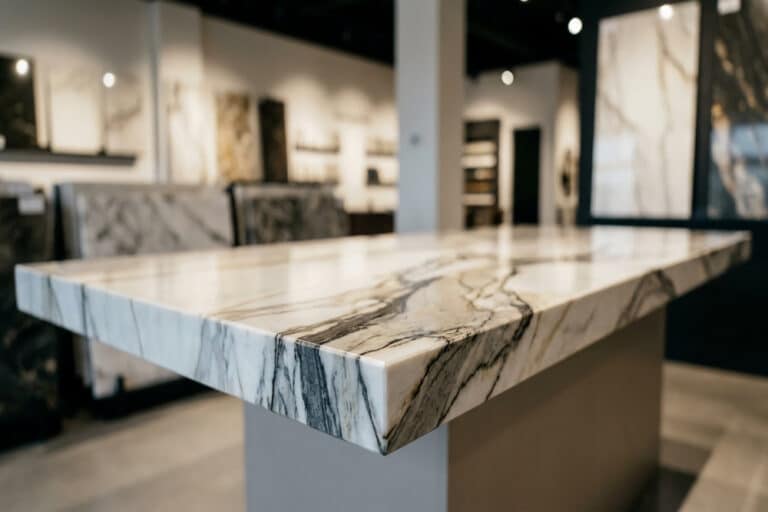
A sample helps with color, but a larger display or slab better shows Carrara Pisa’s scale. Subtle details visible in close-up photography may look much quieter across a full kitchen.
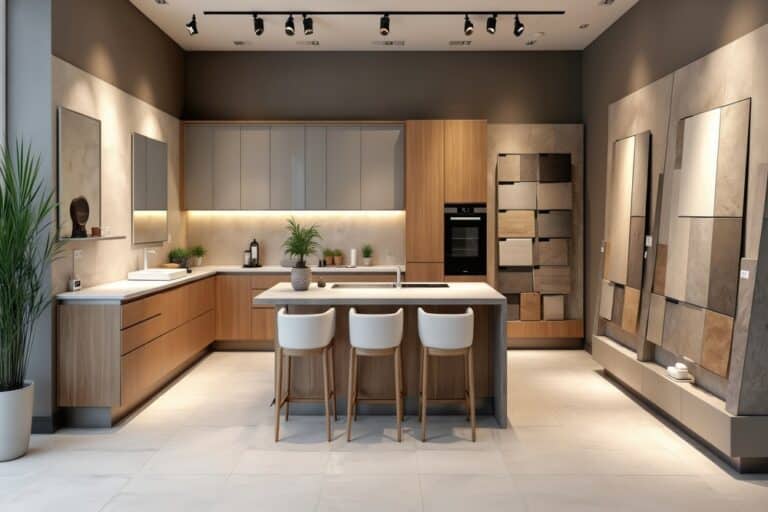
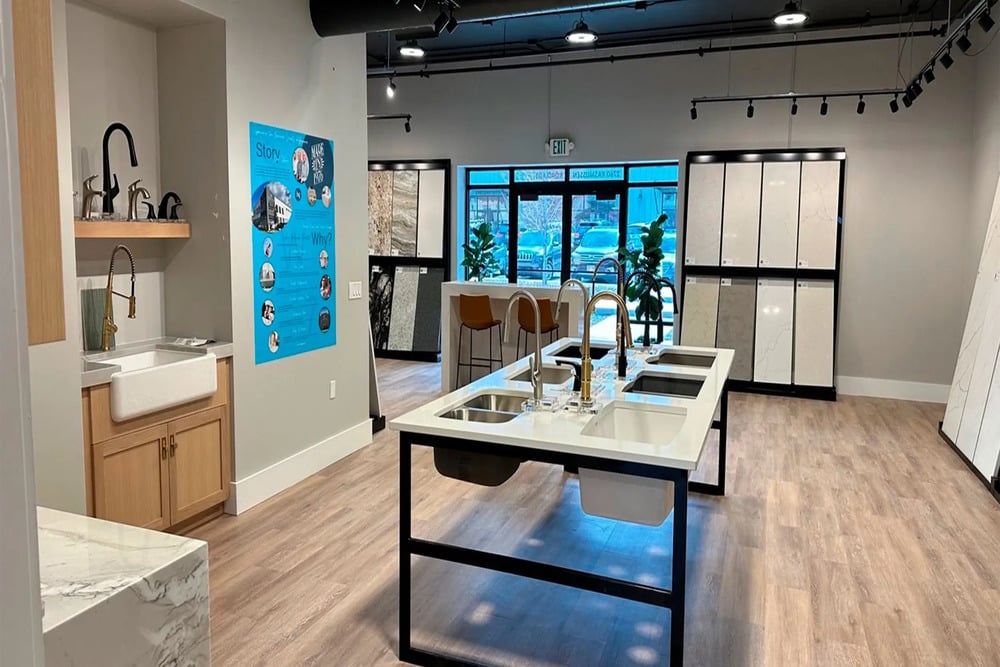
Bedrock Quartz operates showrooms throughout Utah, including along the Wasatch Front, in Utah County, Park City, and St. George. Our team can help compare white quartz colors and coordinate other finishes. Contact your preferred showroom before visiting to confirm that Carrara Pisa or a suitable sample is available.
Carrara Pisa Quartz FAQs
Who makes Carrara Pisa quartz?
Carrara Pisa quartz is made by Daltile as part of the ONE Quartz Surfaces collection. Its manufacturer product code is OQ96. Bedrock Quartz includes ONE Quartz Carrara Pisa among the quartz options displayed in its online countertop catalog.
What color is Carrara Pisa quartz?
Carrara Pisa has a soft white background with delicate gray movement. The pattern is relatively subtle, so the surface often appears mostly white from a distance. Lighting and surrounding finishes can influence whether it feels warmer or cooler in a room.
Does Carrara Pisa quartz need to be sealed?
No. Carrara Pisa is an engineered quartz surface and does not require periodic sealing. It should still be cleaned regularly and protected from direct heat, abrasive products, and harsh chemicals.
Is Carrara Pisa good for kitchen countertops?
Yes. Daltile lists Carrara Pisa as suitable for interior countertop applications. Its light color, subtle pattern, and simple maintenance make it a practical option for kitchens, islands, bathrooms, laundry rooms, and other interior spaces.
Can Carrara Pisa quartz be used outdoors?
No. Daltile does not recommend Carrara Pisa for exterior applications. The resins used in engineered quartz can be affected by direct sunlight and long-term outdoor exposure. Choose an outdoor-rated material for exterior kitchens and countertops.
How much do Carrara Pisa quartz countertops cost?
The installed price depends on countertop size, slab thickness, layout, edge profile, cutouts, seams, backsplash choices, removal work, and local inventory. Bedrock Quartz can prepare an estimate based on the measurements and specifications of your Utah project.
What cabinets go with Carrara Pisa quartz?
Carrara Pisa can pair well with white, gray, natural wood, navy, green, and charcoal cabinets. The best choice depends on the room’s lighting and the amount of contrast you want. Compare physical samples before finalizing the combination.
What is the difference between Carrara Pisa quartz and Carrara marble?
Carrara Pisa is an engineered quartz product with a more controlled pattern and no sealing requirement. Carrara marble is natural stone, so every slab is unique. Marble generally requires more careful maintenance and can etch when exposed to acidic substances.
See Carrara Pisa and Other Quartz Options in Person
Visit a Bedrock Quartz showroom to compare Carrara Pisa with other white quartz countertops. Our team can help you review materials, work through design details, and prepare an estimate for your kitchen, bathroom, or remodeling project.
Shop our Full selection of Quartz Countertops, contact Bedrock Quartz, or visit your nearest Utah showroom to get started.